EduLink One
 Satchel One
 Weekly Bulletin
 Sports Portal
 WisePay
 Library Online
 Letters Home
 Email
Email SharePoint
 Friends of KTS

 Mathematics - Year 7
Click here to return to our Modern Foreign Languages curriculum home page
Below you will find more specific information about the curriculum in French for Year 9 students, explaining to you what students will learn, when, why and how. There is also information about how parents/carers are able to support students in their learning, extra-curricular opportunities in this subject and how it links to other subjects and the wider world.
Students who have shown a particular aptitude for languages will study two languages as part of our fast-track programme.
|
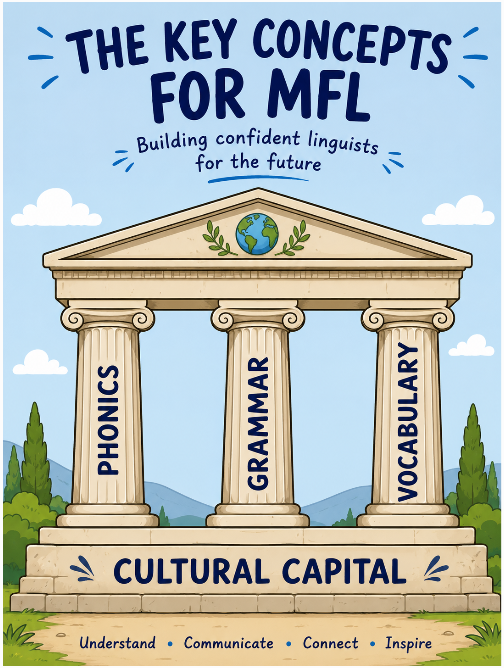
Please click here for Key Concepts |
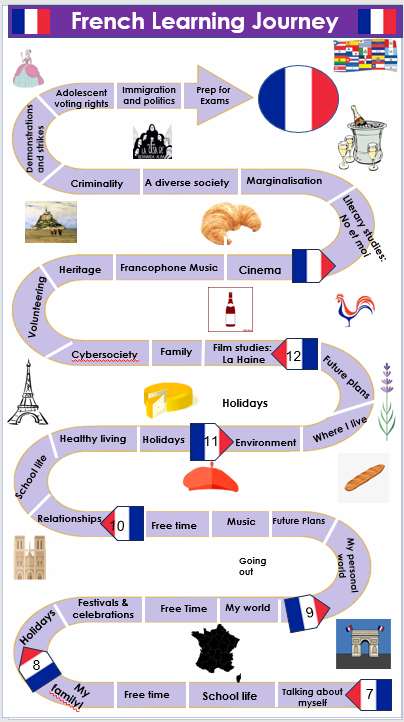


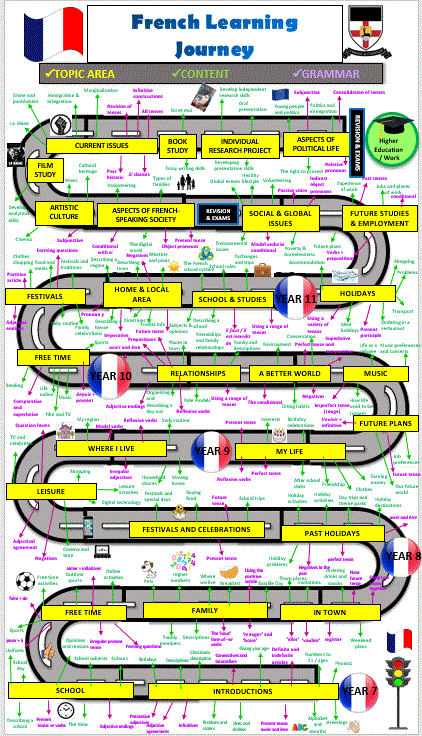
Curriculum Overview for the Year
|
Useful documents:
Please click here for a PDF of curriculum overview.
While this information covers a broad range of areas, please do get in touch with the Subject Leader Mrs Carlyle if you have any questions.
Please click on the questions below to find out more.
How are groups organised?
We organise our classes into sets which are reviewed whenever possible.
The students have 5 one-hour lessons per fortnight.
What characteristics does a successful student have in this subject?
Successful language learners will have a ‘give it a go’ approach to communicating in the foreign language. They will be systematic in their vocabulary learning and show a willingness to get to grips with the grammar behind the language.
How will students learn at this level?
- Learning and recycling new vocabulary and structures.
- Listening carefully in order to improve pronunciation.
- Participating in class speaking activities.
- Taking part in classroom games.
- Using language websites to support your learning.
How will students’ learning be assessed at this level?
You will have regular assessments. We will normally assess two skills at a time, e.g. listening and writing or speaking and reading.
When do key assessments take place?
Assessments will take place at the end of each unit.
How can parents/carers support students’ learning?
Your parents / carers can help you to learn vocabulary and test you on it on a regular basis.
Allowing you to put post-it notes around your room to help you memorise key vocabulary and structures would also help, as would access to a computer or phone so that you can use online resources, such as Quizlet and Activehub.
What equipment do students need for this subject?
No specific equipment is necessary.
How does this subject link to other subjects?
There are many cross-curricular links within languages. In your lessons, you will deepen your understanding of different cultures through learning about the history, geography and religious context of the countries whose language you are studying as well as the art, music and film which has come from those countries. You will also learn about traditional food and may be able to try some!
What websites or resources may be helpful to support students’ learning?
Please ask your teacher for help with logins and passwords, where necessary.
What extra-curricular or enrichment opportunities are available for students in this subject at this level?
Where possible, we organise trips abroad. In the past, students have been to: Brittany, Madrid, Cologne and Paris.
What sort of careers can this subject lead to?
Teaching, interpreting/translating, journalism, marketing, tourism, international aid, diplomatic service, media and business to name but a few!
How does this subject support a broad and balanced curriculum, meeting the needs of all students, and developing traditional core skills?
Broad and Balanced:
We cover a wide range of topic areas to enable students to communicate in the target language in a variety of different situations.
We also develop our understanding of other areas of the curriculum, such as art, music, food tech, geography, history and philosophy, religion and ethics through learning about these aspects of life in the countries where the language is spoken.
Meeting the needs of all students:
Our lessons are well-differentiated to ensure access for all resources are used effectively to support and challenge students. Teaching assistants are also deployed to work with students, where appropriate.
Traditional Core Skills:
Literacy skills are key to language learning and we develop these in our lessons when discussing grammar and language structure as well as reading and writing skills.
How does this subject promote creativity, critical thinking, practice, perseverance and resilience, and making links?
Creativity:
We encourage students to be creative in their use of the language. This could be through writing a poem, creating a comic strip or poster or producing a short video.
Critical Thinking:
We encourage students to consider cultural differences thoughtfully and to form, express and justify their opinions on a range of issues.
Practice, Perseverance and Resilience:
Some of the best learning happens when we make mistakes or encounter obstacles. We encourage determination in our students to keep going in the face of these challenges and to explore different ways of learning and resources to support them. We encourage students to learn vocabulary and structures using all of the tools available to them and to get into a regular habit of learning language.
Making Links:
In lessons, we draw on students’ knowledge and understanding from other subjects to enrich their language learning.
How does this subject encourage enrichment and the development of cultural capital, deep learning, and inclusivity?
Enrichment / Cultural Capital:
Students will gain a greater understanding of different cultures and learn to comment on differences and similarities when related to their own experiences in an informed way.
Substance / Deep Learning:
Language is presented and revisited in different contexts so that it is embedded. Consistent use is also made of retrieval practice to deepen understanding.
OPEN and inclusive:
We promote inclusivity in our lessons by ensuring all students can access and relate to the curriculum.